Author Archive

Why Personalize a Monument?

September 4th, 2012

For many, creating a lasting monument for their loved one is the best way to keep those memories alive. But, how can you best display your loved one’s personality on these lasting memorials. Fortunately there are a variety of ways in which a memorial can be personalized. Recently, FSN Funeral Homes had the chance to discuss personalized memorials options with Chris Freybler from Custom Engraving.

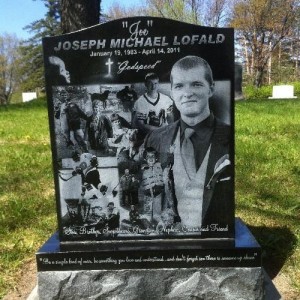
Personalized Grave MarkerFSN Funeral Homes: What does your company do to personalize memorials?

Chris Freybler: Our company FromPhotosToForever.com takes snapshots or professional photos and digitizes them to be engraved into marble or granite.

FSN Funeral Homes: What type of memorials can be personalized?

Chris Freybler: We personalize memorials that can be utilized in a cemetery, as well as memorials that can be used in somebody’s home, flower garden, dedication to a flagpole or even a memorial tree. The headstone pieces are lifestory memorials. Our customers can take take a whole series of pictures throughout their loved ones entire life and create a beautiful collage.

FSN Funeral Homes: How involved are you with your customers when personalizing a monument?

Chris Freybler: We like to talk with them first to get a sense of their loved one and ask them to send photos they would like to be placed on the monument. From there, we discuss what photo is their favorite, which one they would like to use as a focal point and just get an understanding on what their loved one was like. Next, they’ll receive a layout based on what we discussed and they can approve or change the layout if they would like until they are 100% satisfied with the end result. Once we get that approval, we use state of the art lasers to engrave the granite. We work with our customers every step of the way to ensure that their loved one’s personality is captured.

FSN Funeral Homes: Why personalize a monument?

Chris Freybler: Again, they are lifestory memorials. They can actually talk about the person through picture form instead of words, so everyone who sees it can get a sense of the person. Having photos tells more about the person: who they were, what they like to do and what they look like. It’s more personable. It makes a trip to the cemetery more significant. Instead of just staring at a cold stone, it makes it more meaningful for the family and anyone else who visits when they have a picture in front of them. Not only is it important to the family then, but down the road as well, like when they may take grandkids or great grandkids that may not know who the person was, there’s a showcase of pictures for them to get a feel of who their grandparents were as a person. A lot of our customers tell me, “Now when we go the cemetery, we’re looking for a person, not just a name and date. We’re actually looking for grandma or dad.“ You’re actually going to look for your loved one.

Personalizing a monument is truly special for both the family and their loved one. It best displays your loved one’s personality and tells who they were as a person. For more understanding on how FromPhotosToForever.Com does this, see their video below.

Is My Child Ready to Attend a Funeral?

July 12th, 2012

“Could my child handle a funeral service?”

As a parent, the emotional health of your child is always at the forefront of your mind.  When a family member or friend passes, it is natural for you to be concerned about their involvement in the funeral services.  You may be feeling grief, anger or even guilt and fear that your child will experience the same difficult emotions.  In the past, it was considered unwise to allow a young child to attend a funeral, primarily based on the high emotions and fear of death it may create. Today though, most funeral homes, psychologists and parents see the funeral as a chance to provide closure for a child who has lost someone they care deeply about and to shed light on the mysterious, and often frightening, concept of death. FSN Funeral Homes has taken the time to list a few considerations you should make when choosing whether or not to allow your child to attend a funeral.

Is my child old enough?

Age is possibly the greatest concern for most who oppose children attending funerals.  Rabbi Earl Grollman, a bereavement specialist and chairman of the National Center of Death Education at Mount Ida College, suggests that, “If a child is old enough to go to church services, that’s old enough to go to a funeral.”

On the other hand, Hospice of the Valley finds that, “When deciding whether your child should attend a funeral or memorial service, age is not the most important consideration. Your child is part of the family, and children who are old enough to love are old enough to grieve.”  From their perspective a healthy grieving process should be supported in all ages.

The primary concern you should truly have is the maturity level of your child.  Can he or she remain quiet?  Is your toddler too restless to sit through a service?  Will your child remain respectful of others? Decide whether or not your child will disturb others during their mourning.  Remember, kids are kids and you cannot expect them to listen intently to every speaker and song.  If the child can be occupied by a  quiet activity, this would be an appropriate distraction.
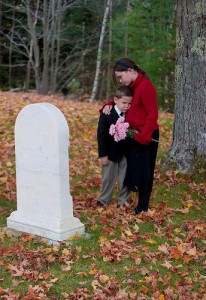
Attending a Funeral Allows Your Child to Say “Goodbye”

How close was my child to the deceased?

If you feel that your child has a meaningful bond with the deceased, that their loss will  affect them personally, then there is good reason to allow your child to attend the funeral.  Just like adults, children need closure.

The funeral serves the same purpose for children as it does for adults.  The shared mourning and celebration of life are crucial to a healthy acceptance of their loved one’s passing.  Phyllis R. Silverman, a psychologist who has conducted research concerning children who attended a parent’s funeral, stated that she found among those children she interviewed a generally positive perspective.  “They were pleased that there were many people at the funeral who cared for their parent. They talked about the importance of remembering, celebrating their parent’s memory and mourning together. The funeral helped them do that.”

Many parents and psychologists have also found that children appreciate being included in the funeral plans of someone dear to them.  Choosing the casket or deceased’s dress is often offered as good ways to involve them in the decision-making process.  You could also suggest they write a letter or draw a picture to be placed in the casket.

Does my child want to attend the funeral?

While it may seem strange to allow your child to make this decision, giving your child the power of choice will provide them with confidence and control in a time when they are feeling powerless.

If your child is uncertain whether or not they wish to go, there are several reasons they may be hesitant.  They could have unanswered questions or unfounded fears.  For example, Barbara F. Meltz, a child care journalist, explains that referring to the deceased’s “body” may unwittingly create a fear of a headless loved one.  They may not understand the gravity of the situation and find personal, selfish things more appealing – like thinking, “Why would I spend my Saturday with old people?  I want to play ball!”

Do not make the child feel guilty for not wanting to attend, simply ask them why they don’t want to.  Address any concerns they mention honestly and sincerely.  Additionally, many psychologists recommend encouraging the child to attend.  Emphasize the family aspect of the service and the reasons funerals are held – showing respect, celebrating life, and grieving with family.

If your child does choose to attend the funeral, encourage him or her to ask questions and assure them that you want to know how they are feeling.  Conveying openness and a willingness to work with your child will give them the support they need to address their grief. Make sure to thoroughly explain what will happen during the funeral so they fully understand what will take place, eleminating any fear of the unexpected.

The Key to Protecting Your Child
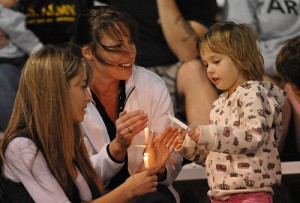
Let your child feel included in the funeral

As an adult, you understand what has happened to a deceased loved one without attending a funeral, but a child has no concept of such things as a casket, grave, or burial if you do not educate them. Imagine never knowing what has happened to a loved one; this is how your child could feel if they are not familiar with the concept of death and funerals.   The best method to ensure your child will be ready for a funeral is to prepare them yourself.  Do not avoid answering questions, but reward curiosity with enthusiasm.  This preparation should address the following aspects:

  • The Funeral Service – Hospice of the Valley suggests you make sure the 5 W’s and H are answered for the child when addressing the funeral service (Who, What, When, Where,  Why and How).
  • The Concept of Death –   Death’s permanence, the separation from a loved one, and the physical body may be difficult concepts for your child to understand.  Be straightforward and avoid euphemisms which may be confusing to your child.
  • The Emotional Aspect –  Describe how some people may be acting at the funeral – crying, quiet, etc. – and open up to your child about how you feel.  Most importantly, make sure your child is comfortable with his or her own feelings.  Let them know that reacting emotionally is natural, but also that he or she will not be expected to act like everyone else.  Everyone mourns differently. Encouraging your child to write, draw, or talk out any feelings they are having is a good way to gauge how they are reacting to the experience.

If you find discussing any of these issues difficult, there is no need to worry. There are plenty of resources out there to help you educate your child on all aspects of death – from the funeral to grief.  Also, when you find the funeral home which will be holding the service, contact the director.  Sometimes they will have special services just for children or at least will be prepared to answer any questions your child may have.

“I hear people say the funeral would be too hard on them.  They are not allowed to say good-bye to loved grandparents because the experience might traumatize them.  In our efforts to protect, we leave it to their imaginations.  That which is left to the imagination is an invitation to nightmares and struggle.”

 – Doug Manning, in The Funeral: A Chance to Touch, A Chance to Serve, A Chance to Heal

While it would be easier to look at this decision as if it were black and white, it’s not. This issue truly is a personal decision based on your individual child – and it should be individually based on each child you have.  Though the parental instinct wants to immediately protect your child from  such a tragic event, opening up to your child about what is going on is the best way to protect them.  As Manning said, avoiding the topic of death simply makes it a more terrifying idea.  Children will try to explain their world in whatever way they can, even death, so leaving them uninformed is simply leaving room for fear.  Whether or not you find attending a funeral would be right for your child, you should take the time to explain to him or her what is going on.  Most importantly, ensure that your child does not feel isolated.  Make sure they understand what is going on, know that there are people they can reach out to, and let them know that their opinions and feelings matter to the family.  Taking the time to reassure and educate your child could make all the difference in how they deal with the loss of a loved one.

Other Resources for Your Consideration:

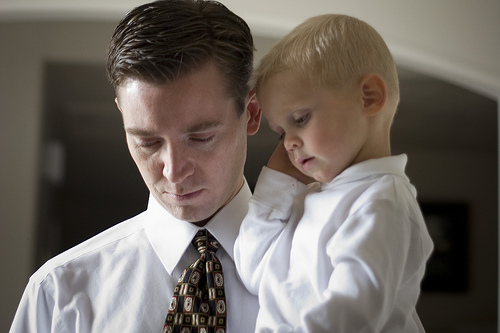
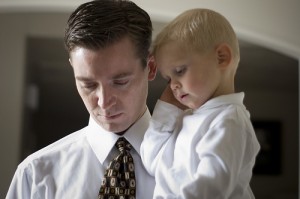
Father and Son photograph from Kelly B. on Flickr.
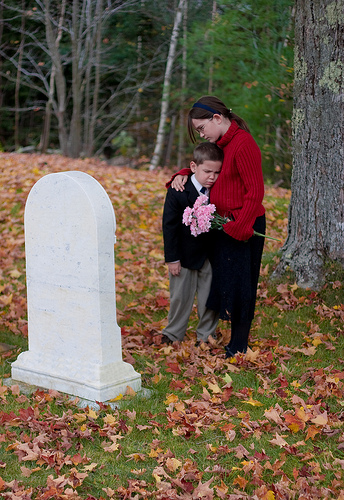
Children at Grave photograph from Kratka’s Photography on Flickr.
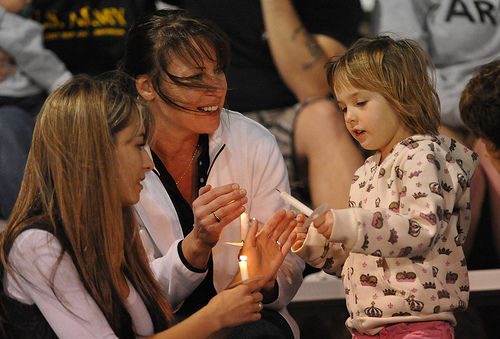
Girl at Candle Vigil photograph from The U.S. Army on Flickr.
What Should I Send to a Funeral?

July 6th, 2012

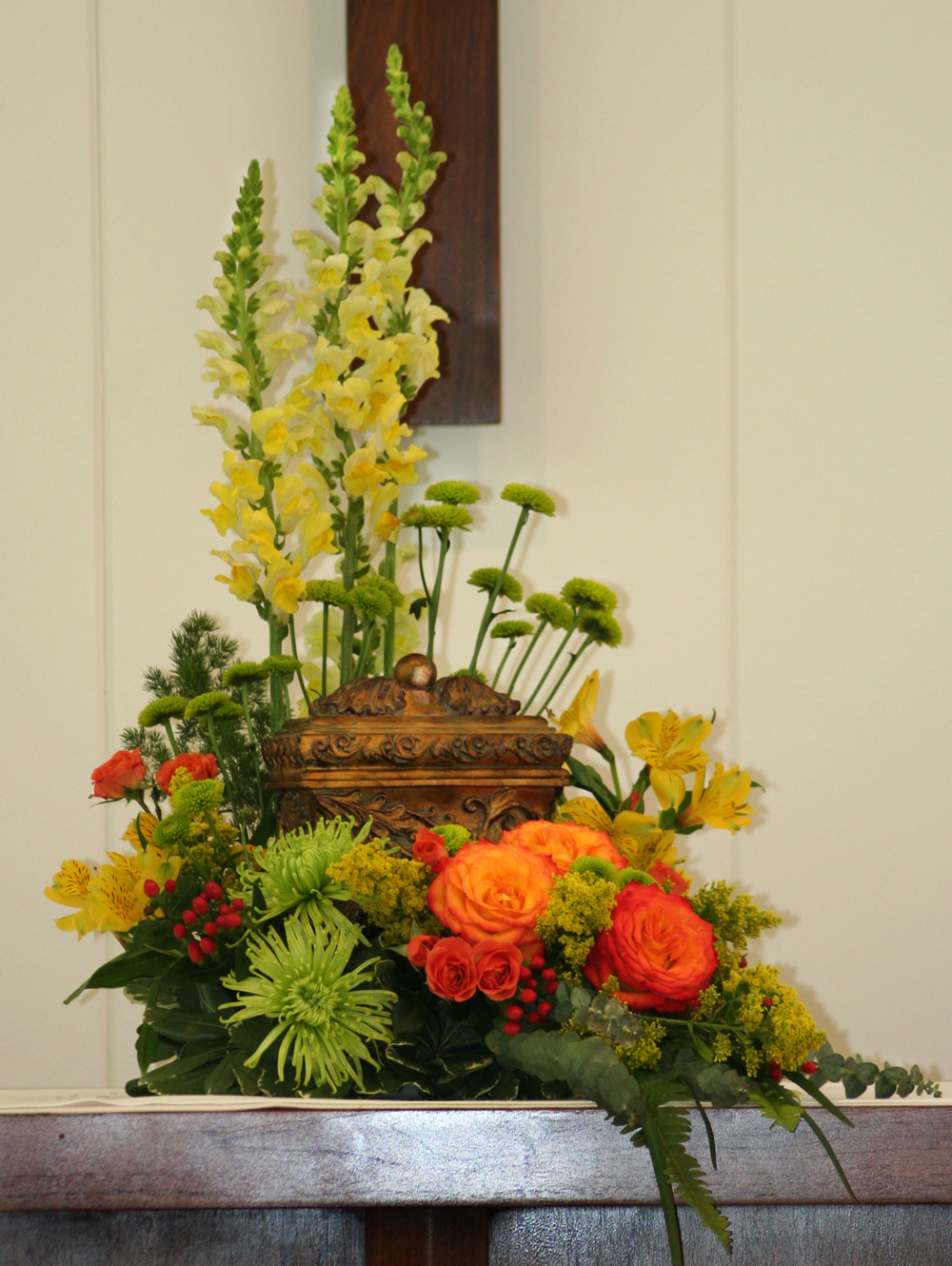
Funeral flowers are a beautiful way to show sympathy.

When it comes to expressing your sympathy to someone who has recently lost a loved one, you want to be sincere and, most importantly, let the individual know you care. The expression of condolences becomes tricky in a country famous for its cultural and religious diversity. Don’t let yourself become flustered when all it takes is a little familiarity with funeral etiquette to overcome such unneeded stress.  To help you out, FSN Funeral Homes has composed this  guide to maneuvering funeral gift etiquette, giving you one less thing to worry about.

Your Relationship with the Deceased

Your relationship with the deceased is a crucial aspect to consider when determining what to send to a funeral.  If you were not close to the deceased, it is appropriate to send the gift directly to the friend or family member you are closest to.  If you were close to the deceased but not to the family, include a card with whatever you send explaining your relationship to the deceased and explaining how important they were to you.  Whether or not they recognize you, they will appreciate knowing that someone else cared for their loved one.

When do You Send Your Condolences?

Depending on the placement and type of funeral service, it may be difficult to determine when to send a gift.  Typically, flower arrangements should be sent prior to the visitation for a traditional funeral service, but funeral directors should accept them for some time later than that.  Contact the funeral director to find out when would be the best time to send funeral flowers. If you find out about the services late, it is appropriate to send flowers to the grave or family’s home. If you wish to send something upon receiving the news, flowers are a good option, but a note or phone call may be more appropriate until closer to the funeral services. After some time passes, many will have moved on in their mourning, but those closest to the deceased may still be grieving.  Sending a sunny bouquet of flowers after the funeral will let them know they are not forgotten in their grief.

The Recipient

Everyone is unique so the gift for a deceased’s mother will not be the same for a child affected by the death.  Keep this in mind when deciding what to send.  A young child will not understand the thought behind traditional flowers, but if you add a stuffed animal to cheer them up or a keepsake which they can appreciate later, the gift will be more appropriate.  You can also tailor any flower arrangements you send to fit the personality of the recipient.  Work with your local florist to make sure he or she incorporates the recipient’s favorite flowers or colors and that the size of the arrangement is appropriate for its destination.  Also, depending on the recipient’s intimacy with the deceased, a more personal gift may be more appropriate.  For instance, a locket with the deceased’s picture or a simple memorial frame may be the perfect keepsake to console the individual.

The Deceased

The deceased should also be considered when deciding what to send to a funeral.  If the deceased would have preferred donations made to his or her favorite charity, then by all means follow their wishes.  At the same time, remember the deceased would also appreciate that their loved ones be comforted at this time, so flowers or a memorial gift would be a great way to extend this sentiment in the deceased’s honor.

Read more about what to send to a funeral

3 Funeral Planning Aspects You Need to Know

June 7th, 2012

The Traditional Funeral Service Can Be Personalized for Each Family

Let’s face it, the average person has little to no clue about what goes on behind planning a funeral service.  That’s why there are funeral home directors to guide individuals through the process.  Even so, it’s a good idea to have a basic understanding of what you want and what you need before meeting with a funeral director.   That’s why FSN Funeral Homes called Janie Singleton, co-owner and funeral director for Faith Funeral Service, to get some insight into recent changes in the funeral home industry and her opinion on the funeral home’s responsibility to educate the public.

Through her 12 years working in the industry, Singleton has found many myths exist around funeral planning which create potential problems.  In a recent seminar hosted by Singleton, she discussed three major aspects affecting the funeral home industry which she feels the public should be more aware of: changing burial methods, pre-planning, and new legislation.

Changing Burial Trends Provide More Options

As she discussed the number of ways which a burial may be planned, Singleton stresses the opportunity this gives to those burying their loved ones.  “Every service can be customized to fit each family,” Singleton explains, “and that’s what we try to do.” Here are a few burial options Singleton described:

Remembering Lost Loved Ones During the Holidays

May 29th, 2012
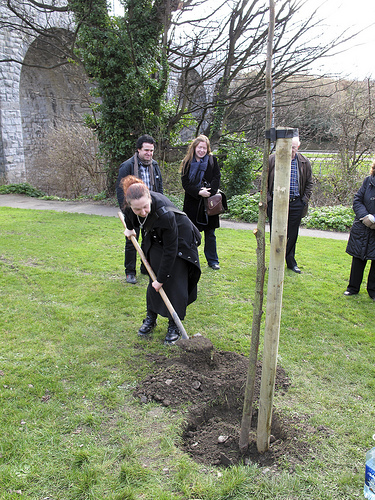
Memorial Tree Planting

Remember Loved Ones By Planting A Memorial Tree

The holidays may be a time which brings friends and family closer together, but it’s not easy to celebrate with the loss of a loved one weighing on your mind. While their absence may be painful, there are many beautiful ways to remember those you have lost and to celebrate their life during the holidays.

Overcoming Holiday Sadness through Memorials

If you want to remind yourself and others that a loved one’s passing has not ceased their importance in your life, a memorial can serve as the perfect reminder.  Many different types of memorials are out there and each could be easily personalized with intimate touches. Below are a few examples.

  • A living memorial, such as a tree or rose bush, makes a perfect opportunity to host a memorial service in your loved one’s honor.
  • Annually lighting a candle allows those who participate to take a moment to remember those they have loved and lost and may be displayed in a window for all to see.
  • Christmas ornaments or memorial plaques may be set up with holiday decorations as a seasonal reminder of a loved one’s memory.
  • Hand-maid memorials give kids the opportunity to participate in the remembrance process.  (Ideas and templates  for homemade memorials may be found online.)

Continue reading “Remembering Lost Loved Ones During the Holidays” »

What You Need To Know When Selecting An Estate Planner

April 23rd, 2012

At some point, everyone is faced with the task of estate planning.  Although the thought and task seems overwhelming and confusing, estate planning is nothing more than an orderly and defined plan of distributing one’s assets following their death.  For many, knowing where to begin their estate planning efforts is confusing.

Estate Planning Interview with Mark Bosler of the Bosler Law Office

FSN Funeral Homes understands the apprehension many people have when it comes to planning their estate and the need to involve a professional estate planner. So, we reached out to an authority in the estate planning industry – Bosler Law Office.  Mark Bosler was able to answer many of our estate planning questions. We hope this interview answers many of the questions you might have on estate planning and how to select a professional estate planner.

FSN Funeral Homes: First off, a lot of personal details go into estate planning and people want someone who is trusted and understanding. What should they look for when selecting a professional estate planner?

Mark Bosler: Clients should choose a professional estate planner for several reasons, including experience, expertise, and a genuine desire to help them understand the process and plan for the future.

FSN Funeral Homes: If someone was considering your firm for their estate planning needs, what do you have to offer that would make them choose Bosler Law Office?

Mark Bosler: With over 20 years of experience in working with clients to draft appropriate estate planning documents, we have worked with hundreds of clients and encountered many situations from which they may draw upon to provide comprehensive and effective estate planning and administration services for our ever-growing client base. With personalized assistance and attention to detail, we seek to provide each and everyone of our clients with vigorous goal-oriented advise and representation. We look forward to working with new clients every day to serve their needs so that they may look with confidence to the future.

FSN Funeral Homes: So you provide an in-depth evaluation of their individual needs and situation because estate planning isn’t something that can be done with a cookie-cutter approach. Since this is a very personal and situational endeavour, how should an estate planner assist their clients with the planning process?

Mark Bosler: First off, estate planning has to do with educating and advising clients on the practice and procedure of estate administration, and the legal documents necessary to carry out an effective plan. We assist our clients by educating and informing him or her on factors which could or would affect their person and estate going into the future, whether it be the need for treatment or medical care, retirement benefits and financial planning, relationships, taxes, estate distribution and other factors. Once we have identified and prioritized those factors which are of specific concern to our client, we will proceed to formulate a plan which will address those factors.

FSN Funeral Homes: So, estate planning is more than just giving your possessions away to friends or family. It is really about making sure that every aspects of your life is in order with a planned goal and priority in order to save your grieving family from the stress of it. That can be a very tall task. How do you actually take your clients throughout the planning process?

Mark Bosler: We start the process by reviewing our client’s current financial situation and relationships, determining and prioritizing their objectives, and presenting them with the tools and information needed to make decisions and implement their goals and objectives.

FSN Funeral Homes: Because every individual’s situation is different, the type of estate plan can run from a very basic nature to a more robust one. What is involved in a basic estate plan and how do you know if a more robust estate plan is needed?

Mark Bosler: A basic estate plan should include the preparation of a will that would direct the distribution of your estate and appoint necessary fiduciaries to administer that estate, a living will which would state or summarize your preferences regarding life support treatment, a Patient Advocate Designation and Durable Power of Attorney for Health Care with medical directives, and a General Durable Power of Attorney to allow estate administration upon disability. A more sophisticated estate plan may include Living Trusts, Testamentary trusts, Irrevocable Trusts, and other documents based upon the Client’s needs and objectives.


There are many details that go into estate planning. Therefore, you want a law office who will assist you and take care of you in every way possible, just like Bosler Law Office. Having someone who will walk you through the process with great ease and understanding is always essential.

FSN Funeral Homes thanks Mark Bosler of the Bosler Law Office in Bloomfield Hills, Michigan for all the great information about estate planning.

The key takeaways here are:

  1. Estate planning is very important and very personalized.
  2. What you need to plan your estate and how robust your estate plan needs to be is determined by your individual needs.
  3. Some parts of estate planning deal with issues and situations that occur prior to your death.
  4. Finding an estate planner that is knowledgeable and experienced in crucial.
  5. Communication and good information are very important when working with an estate planner. (To communicate more effectively with your estate planner review the Glossary of Estate and Probate Terminology provided by FSN Funeral Homes and fill out the Estate Planning Checklist to take with you.)

Hopefully with this information, estate planning won’t seem so overwhelming.

EPA and Federal Rules On Scattering Ashes From Cremation

January 23rd, 2012

Disposing of Cremation Ashes and the Government

If you or a loved one has decided on cremation, there are few things you’ll need to consider when planning what to do with the cremains (ashes). You have two choices: keep the cremains or dispose of the ashes through burial or by scattering them. Either choice comes with its own set of rules, regulations and laws governed by federal and state agencies.

EPA and Cremains

The Environmental Protection Agency (EPA) is the federal agency that oversees the federal rules on cremation remains disposal, including the laws concerning federal lands and federal jurisdictions. Individual states each have their own rules and regulations, but can, and often do use the rules the EPA has set as guidelines.

The only federal rules that are generally enforced are ones regarding scattering of cremains at sea and by air. Scattering at sea falls under the Clean Water Act. Scattering by air falls under individual state rules and regulations. However, federal aviation laws (FAR91.15) state that a pilot can’t drop objects that can cause hazard to persons or property. The U.S. Government does not list cremains as hazardous material.

Cremains (Ashes) Disposal at Sea

Scattering Ashes At SeaIf the dispersal plan includes a scattering ashes at any of the following: sea, lake, pond or stream, you need to follow the requirements of both federal and state agencies.

Don’t be alarmed, federal and state governments don’t have stringent policies concerning cremation burials. Nevertheless, they do have a few rules and permits.

According to the EPA under the Clean Water Act, cremated remains must be scattered at least 3 nautical miles from land, by boat or by air. Containers such as urns, vases or cremation boxes must be disposed of separately if they are not made of readily decomposing material. The EPA does not allow for cremains to be scattered at beaches or in wading pools by the sea.

Although these rules are very straight forward and the permits are easy to obtain, it is a good idea to consult with the local funeral home or cremation services company handling the cremation. Equipped with the knowledge of the specific, cremation disposal requirements in your area, these professionals can provide the permits or complete the necessary paperwork needed to scatter the ashes at sea or other bodies of water. Continue reading “EPA and Federal Rules On Scattering Ashes From Cremation” »

Personalizing A Loved One’s Funeral

November 8th, 2011

Planning a funeral for a loved one is a difficult time for anyone. A lot of work, time and effort goes into the planning process. Also, you want to make sure that it’s a special time of remembrance for your loved one. Have you thought about ways that you can personalize your loved one’s funeral?

Consider Their Unique Personality Traits

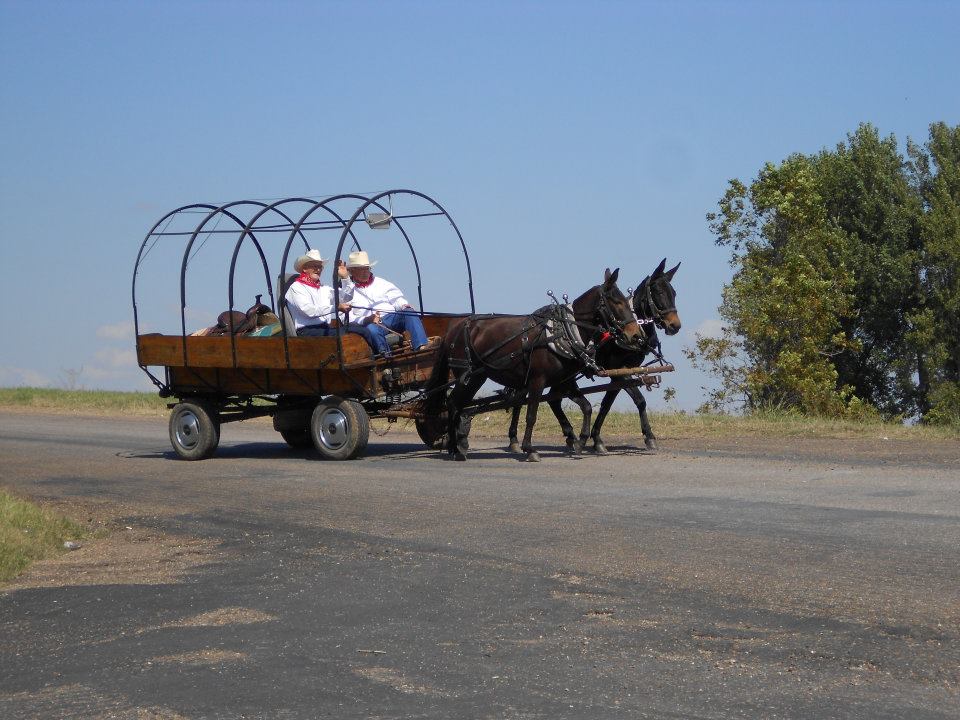
Funeral Wagon - Personalized Funeral TransportationWhen planning to personalize your loved ones funeral, think back to the fond memories you shared with them. Think about their stand-out qualities, and what other people saw in them. Also, consider their likes, hobbies, dislikes, achievements and passions.

Personalizing The Funeral Ceremony

Once you have thought about what that person meant to others and took into consideration their passions and likes, get together with other family members and come up with a creative way to incorporate these elements into the ceremony.

Personalize the visitation, eulogy, music, readings, procession, committal service, the gathering or reception. Each can be personalized in different and many ways. For the visitation, display photos, memorabilia, collections of their work or their achievements for a personalized effect. Choose music that is meaningful to that person, poetry and readings that describe that person’s life,
or even have the procession vehicle catered towards their hobbies or interest.

Ask people that were closest to that person to give readings, play music or be a pallbearer; however they feel they can contribute. A great way especially to personalize the ceremony is during the speech. This is the time that they can talk about all of their great qualities and passions.

More Tips For Personalizing A Loved One’s Funeral

FAQs: Funeral Planning

September 10th, 2011

Here at FSN Funeral Homes, we strive to find the best advise for the questions so commonly asked about funeral planning and the details that come along with it. Here is a list of the most frequent questions and their answers. If you have any questions, please feel free to ask.

FAQ : Funeral Planning

 Funeral QuestionsWhat do I need to know about funeral planning?

There are a few basics you should always keep in mind when planning a funeral.

  • Be informed and ask questions.
  • Go over all options available at several funeral homes, making sure the funeral home you chose is suitable for your personal needs and budget.
  • Request an itemized price list.
  • Make the arrangements for a personalized service to honor your loved one.

Who do I need to contact first when pre-planning a funeral?

  • When pre-planning a funeral you can call the funeral home directly and work with the funeral director there, or you can contact an Estate Planning attorney.

How much does an average funeral cost?

  • The average funeral in today’s time is somewhere between $6,000 – $8,000.  This estimated price includes, all services provided by the funeral home, casket/urn, burial and cemetery arrangements.

Continue reading “FAQs: Funeral Planning” »

Types of Funeral Service Providers

September 7th, 2011

Funeral service providers are not all created the same and do not always offer the same services you might be expecting. When planning a funeral, you don’t always have a lot of time to make arrangements – so, learning the ins and outs of funeral planning ahead of time can help for when the time is necessary.

Funeral Home OptionsThere are three categories of funeral providers to choose from.

  • Full Service Providers
  • Specialized Service Providers
  • Limited Service Providers

Full-Service Funeral Providers

Full service providers offer the most options and services when it comes to funeral planning. They can fulfill any service request at any time. The services available are:

  1. Facilities for people to gather in for visitations and ceremonies.
  2. Vehicles such as a hearse and limousines for funeral processions.
  3. A large range of caskets, urns and other funeral service merchandise.

Keep in mind – that when using Full Service funeral home they often don’t offer simplified services with the same attention to detail as they would for a more elaborate full service ceremony.

 Specialized Service Providers

Specialized service providers offer similar service options as the full service funeral homes do but on a more limited basis. The services are:

  1. Facilities for people to gather in for visitations. Typically they are smaller than the full-service providers buildings – and only have one or two rooms for services and ceremonies.
  2. Vehicles may or may not be provided, and hours of operation may be shorter.
  3. Small range of funeral merchandise, including caskets and urns. They are typically in a building similar to doctors office in appearance.

Limited Service Providers

Limited service providers usually arrange direct cremation and burials without ceremonies.

  1. The services they offer are usually limited when it comes to completion of documentation and transferring the deceased to the crematory or cemetery.
  2. Merchandise choice is very limited.

Make sure that the services and merchandise they offer are adequate for your situation. They are often very limited and precise when it comes to providing funeral services, however they are often the least expensive option.

Keep in mind…

  • When ‘shopping’ for a funeral home provider, take care to go over all the details before signing any contracts. You can use the Funeral Home Comparison Checklist to help you when planning a funeral, by comparing prices and services offered at the funeral homes in your area.

Once you have chosen the funeral home to coordinate and provide your services, you will sit down with a funeral director to start planning and arranging the funeral. The whole situation is a bit intimidating if you are not sure of what to expect and how to express your concerns. By educating yourself about funeral and cemetery terminology as well as the means needed for pre-planning a funeral ahead of time, you will feel more comfortable when making the arrangements.