Home > Monuments

 
Monuments

If you are choosing a headstone or memorial monument for you or your loved one, you will find all you need to know in the helpful articles below.
Recent Monuments Articles
 

Perserving & Caring For Your Loved One’s Headstone or Monument

October 20th, 2011

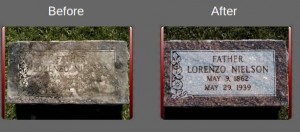
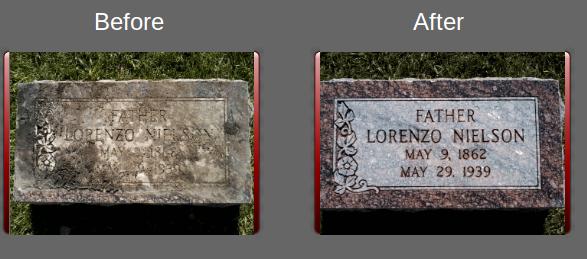
Although most burial monuments and headstones are made out of durable stone or metal, they still need proper care to keep them looking their best for many years to come. Hard water, dust, mold, fungus and lichens are common causes of headstone grime, but with regular care, they can be easily removed. It is recommended to clean your monument only once every 10 years.

Preparing To Clean Your Stone Headstone or Monument

  • First of all, you must acquire permission from the lot owner or next-of-kin, if that is not you. Talk to the cemetery caretakers to find out about routine cleanings they might already do.
  • Inspect the monument for any flaws, such as cracks, flaking or any sign of deterioration. This may be more present in concrete or limestone monuments. DO NOT clean a wooden headstone.

Traditional HeadstoneCleaning Supplies 

  • Ample supply of natural or distilled water.
  • Soft, white-bristle brush.
  • Toothbrush.
  • DO NOT use natural bristles when cleaning your monument, this can encourage organic growth.
  • DO NOT use wire bristles or any other metal instrument to clean your monument.
  • If your headstone is very dirty, use ONLY non-ionic cleaners.
  • DO NOT use household cleaners, including bar soap, borax, vinegar or bleach.
  • DO NOT use pressure washers.
  • DO NOT use sealants of any kind.
  • DO NOT use shaving cream. (Once a popular cleaner, now shown to be harmful to the materials used.)

Continue reading “Perserving & Caring For Your Loved One’s Headstone or Monument” »

Placing Pebbles on Gravestones: A Jewish Tradition Explained

August 5th, 2011

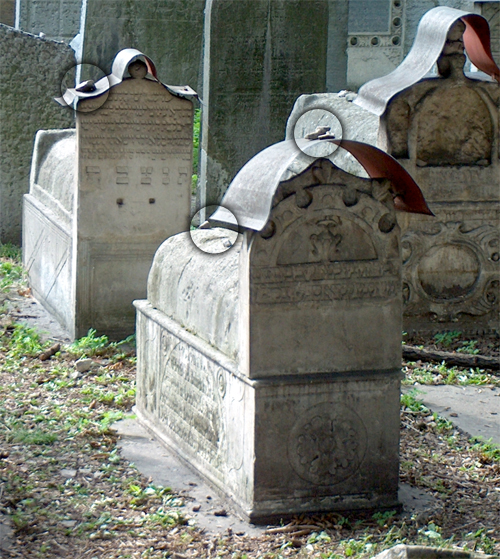
Example of Jewish Headstones with PebblesIt is unlikely that you will see flower arrangements laid upon headstones in traditional Jewish cemeteries. Instead, you might notice heaps or mounds of pebbles atop of the grave sites. Large and small in no particular pattern or shape. This is an age-old Jewish tradition that roots from Biblical stories. It’s hard to tell exactly where the tradition originated, however, it is thought to go back to ancient times.

Evidence in Scripture

  • In the book of Exodus Moses spent 40 years traveling from Egypt to Israel. Instead of burying their dead, they would cover the body with a sheet and then cover with rocks and pebbles to hold the sheet down.
  • In the book of Exodus God manifested the 10 Commandments on a stone tablet in the presence of Moses.
  • In the book of Exodus Moses is told by God to strike the rock at Horeb to bring forth water from the rock; this was done in front of the elders of Israel in God’s name.
  • In the book of Genesis Abraham was told to build an altar (a mound of rocks) to sacrifice his only son, Isaac, as a test from God.

Adorning gravestones with pebbles

In Judaism it is customary for Stones of Remembrance to be placed on gravestones by family and friends visiting the departed.

Continue reading “Placing Pebbles on Gravestones: A Jewish Tradition Explained” »

Choosing and Personalizing a Grave Monument

July 12th, 2011
Little Girl Statue Grave Marker - Gracie

Gracie Statue Monument

Choosing and designing a monument for your loved one is a very important step in the grieving process, and your last expression of love during this sorrowful period.


The headstone or monument is a tribute to their life. It’s a visual remembrance. It tells the story of their life, ensuring that for years to come, they will be remembered.

What Is the Purpose Of Cemetery Monuments & Headstones?

Cemetery headstones and monuments are more than just a way to mark the grave site. Throughout history, cemetery monuments have told the story of a person’s life.

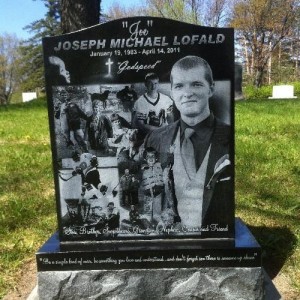
Included on the monuments could be a statement of character, their interests, place of birth and place of death of the deceased. How many children the person had, how they died, a Bible verses, a poem or even special quotes are also displayed on burial markers.

The essence of the deceased is forever captured by placing these insights on their grave monument. Families displayed this information on cemetery monuments as a lasting tribute to their loved ones.

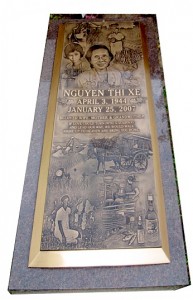
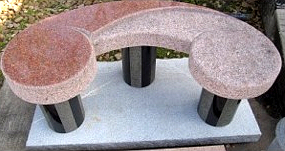
Words are not the only way to personalize a monument for a lasting memorial. Statues, mausoleums, grave benches and plaques can create a sense of how esteemed the deceased was to their community, family or nation.

In the Bonaventure Cemetery in Savannah GA, two families memorialized the life of their daughters with statue monuments. The headstones for Little Gracie and Corinne are life-like statues, created to replicate their image as it was in life.

Continue reading “Choosing and Personalizing a Grave Monument” »

Planning a Green Burial

June 30th, 2011

What is a Green Burial?

Planning A Green BurialA green, natural or eco-burial is a burial that allows the body and the burial grounds to stay as natural as possible. No embalming, concrete vaults, or toxins are used. Bio-degradable caskets, shrouds or blankets are used instead of traditional caskets, urns or vaults.

What is the Importance of a Green Burial?

Green Burials cause minimal environmental impact. In nature everything is recycled, there is no waste. Green burials are both an earth friendly, and less expensive option.

Is Cremation Considered Green?

A green burial is often an alternative to cremation. Cremation, however is more environmentally friendly than traditional burials. Using a bio-degradable urn is a good option if you’re considering a green cremation.

Modern crematoriums have made significant reductions in emissions through out the years, making cremation a safe choice.

What are the Costs of a Green Funeral?

The average price for a green burial ranges from $1,000 – $4,000, which usually includes the burial plot, opening and closing of the grave, grave marker and maintenance fee.

Continue reading “Planning a Green Burial” »

Eight Cemetery Monument Materials

November 4th, 2010

Cemetery monuments have been used for thousands of years.  Typically people would use whatever natural material happened to be available locally.  Often this was whatever local rock was available or wood which was not very durable since it would rot very quickly.  People today have more options than ever.

It is no longer necessary to pick the cemetery monument material based solely on proximity to your town.  Today, people can pick the best and most durable material available.  For many the choice is bronze and granite.

Throughout  the years, several different types of materials have been used to create monuments. Despite their obvious deficiencies, some of these materials are still used today.  Sandstone, limestone, granite, marble, and others have been used for generations. Several of these gravestone materials lack durability or accessibility.

This article will highlight the various types of materials used in cemetery memorials and will explain the advantages of each material.

Granite

Granite is by far the most popular headstone material type today.  Granite comes in a multitude of colors including grays and pinks. It also has a wide variety of textures.  Granite is one of the strongest natural materials with a durability that lasts for generations. In fact granite is so hard that it is difficult to carve by hand.  Granite is very popular today because of its sturdiness.

Marble

Marble is another type of monument material that is still popular today.  There are several types of marble.  Marble comes in a wide range of qualities which means that some materials are quite permanent while others are not.  White marble, for example, is  a beautiful material but may eventually develop a black film over its surface.

Cast and Wrought Iron

Cast iron grave markers were popular during the Victorian era and have survived for generations.  Their not so lucky counterparts, wrought iron grave markers still stand but many have succumbed to rust or live in an eroded state.
Continue reading “Eight Cemetery Monument Materials” »

Cemetery Monument and Headstone Options

September 28th, 2010

Planning a funeral seems like a difficult task.  With all different types, shapes, sizes, flower placement styles and cremation burial options available it can seem impossible to select a memorial that is meant to enshrine your loved one’s memory for eternity.  In the next several sections, different types and styles of cemetery monuments have been described that should make selection during a difficult time easier.

Companion Monuments

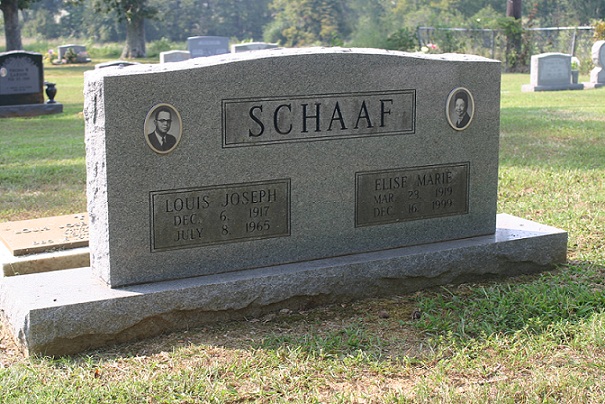
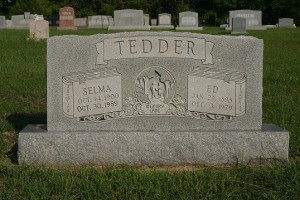
Companion headstones usually sit on a family plot and are meant to memorialize more than one person.  While these monuments are typically meant for two people, they can be enlarged to allow for the names of more family members.

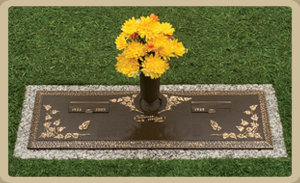
Companion headstone with vase and traditional companion headstoneCompanion monuments can come in an upright or flat style.  We will mention all the flat, slanted and bevel styles further down in this article.  When thinking of purchasing this monument, consider whether or not you would like to be able to place flowers on the headstone.

There are many flower options that exist for companion monuments.  One such option is an interconnecting vase between the two sides of the companion headstone.  Another option is to have one large double monument with flower vases on either side.  There can also be an inlaid space at the top of the monument that allows for flowers to be easily placed on top.

A final option could be a monument with no designated space for flowers and one could purchase a wire flower saddle.  The wire flower saddle straddles the cemetery monument at the top and allows for easy flower placement on an upright headstone.

Individual Monuments

Individual MonumentsIndividual monuments are meant to be memorials for one person.  As with companion headstones, individual markers come in flat or upright styles and have flower placement options.

There can be two separate vases along either side of the  individual marker, an indented space can be made available at the top of the headstone, or a wire flower saddle can be placed upon the individual gravestone.

Individual headstones have space on them for a design, the name and dates of your loved one.


Bevel, Slant, and Flat Monuments

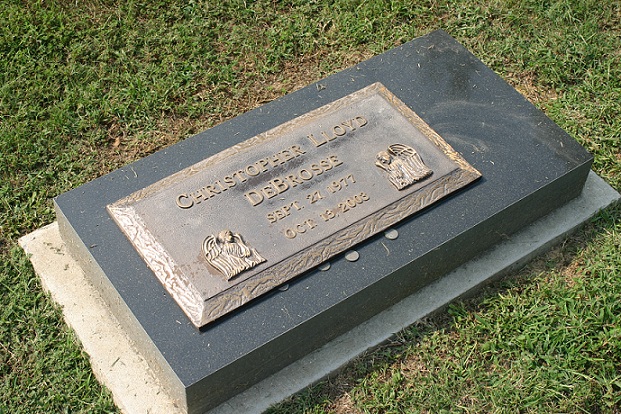
Bevel and slant headstonesBevel and slant cemetery monuments are meant to sit at the head or foot of a grave.  A bevel monument is flat and a slanted monument sits upright at a slight angle.  The design of the bevel or slant monument is to allow one to read the marker when approaching the grave memorial.

These headstones can be small enough for just one name or large enough to be a companion monument.  What makes the slant and bevel headstone different from a traditional flat marker is that a base is located beneath the monument.

Flat headstoneThis allows the marker to be lifted, making it more visible and also keeping lawnmowers back. Flower vases can also be placed at one side of these markers to allow for convenient flower placement.

This type of monument is large enough to put an engraving of a small design, as well as the  full name and dates of your loved one.

Flat markers, like slanted and bevel cemetery monuments can be small enough for just one name or enlarged to be a companion style.

They are similar to slant and bevel styles except that there is no base located beneath the monument. They are at ground level allowing lawnmowers to mow over them.

Continue reading “Cemetery Monument and Headstone Options” »

Grave Blankets

January 5th, 2010

Everything You Need To Know About Grave Blankets

Grave blankets, also referred to as cemetery grave blankets, are decorative coverings for the gravesite. In the same way that casket sprays decorate a casket at the funeral, grave blankets decorate the gravesite at the cemetery.

Grave blankets are traditionally made of evergreens (such as pine) and decorated with accents like baby’s breath, ribbons, bows, etc. Grave blankets come in many sizes. The smallest of these, often referred to as grave pillows, are more compact and reside near the headstone.

Areas Where Grave Blankets Are Popular

Grave blankets, though not traditional to any part of the country, are an American tradition that has taken root in northernmost states. Grave blankets are most common in states with colder winters. The most popular locations for grave blankets are Michigan, Ohio, New Jersey, Pennsylvania, Illinois and New York.

Even in areas that do not suffer harsh winters, grave blankets are a popular winter cemetery decoration because most fresh flowers cannot tolerate the cold. Live evergreens in grave blankets provide a fresh alternative whereas otherwise the only options are silk flowers, artificial flowers, or no decorations at all.

The Proper Time To Use Grave Blankets

Grave blankets are typically used in the late fall and throughout the winter. Though each cemetery is different, most allow grave blankets to be displayed from November through late March or early April. During this season, Christmas grave blankets are popular.

As this season wanes, grave blankets for other holidays are selected. These may include a grave blanket for Mother’s Day, the anniversary of the person’s death, the birthday of the deceased, and other occasions.

Other Helpful Information About Grave Blankets


Learn how to make a grave blanket.