Author Archive

What To Do When A Loved One Dies

June 15th, 2011

When a loved one dies, the family and friends of the deceased are left planning a funeral service in a time of grief and confusion. This article is here to help, and guide you through the steps needed during this difficult time.

When a Loved One DiesWho To Notify After a Death:

Family Members – Spouse, parents, siblings, children, aunts, uncles, cousins and friends should be notified first. *tip* It might be easiest to appoint certain people to do the calling to help lessen the load.

Insurance Companies – auto, home and life insurance companies, as well as any others the deceased might be associated with.

Employers – If your loved one was working, you’ll need to call his or her employer immediately. You will also want to ask about:

  • Deceased benefits and any pay due, including: vacation, sick time, disability income, etc.
  • If you or other dependents are still eligible for benefit coverage through the company.
  • Whether there is a life insurance policy through the employer, who the beneficiary is and how to file a claim.

Continue reading “What To Do When A Loved One Dies” »

Estate Lawyers: What to Expect

June 13th, 2011

Estate lawyers, also known as probate lawyers or attorneys, are responsible for taking the personal representative/executor of a will through the estate planning process. Which means that they are trained to walk you through every step of your estate planning.

Estate Lawyers are equipped to offer legal and educational support helping you to organize and legalize your estate distribution.

Why hire an estate attorney?

If you have a complex estate or family situation that requires detailed planning, hiring an estate attorney to help you is a good idea. A good estate lawyer can build your estate plan, as well as minimize potential taxes and fees, and set up a contingency plan to make sure that your assets are distributed to the correct beneficiaries.

Examples of complex estates and complicated family situations

  • Own your own business
  • Your estate is worth more than 1 million dollars
  • Have a special needs child

Continue reading “Estate Lawyers: What to Expect” »

Funeral Etiquette – Knowing What to Say

June 9th, 2011

Worrying about what to say and how to act at a funeral only adds more stress to an already emotional time. When it comes to expressing your sympathy and condolences at a funeral keep it sincere, heartfelt and simple.

Words of Sympathy

Words of sympathy are expressions of love and empathy for the grieving. When attending a funeral, it is best to address the family member of the deceased with a few kind words of sympathy.

The nature of your relationship with the family will dictate how much, or little you should say. If you are not familiar with the family, offer a small, heartfelt  sentiment such as:

  • I am so sorry for your loss
  • You are in my thoughts and prayers
  • I am just a phone call away
  • I have no words to express my sympathy, just know that I care
  • I am here for you

Continue reading “Funeral Etiquette – Knowing What to Say” »

Legacy Funeral and Cremation Care

June 7th, 2011

A Helping Hand When Planning A Funeral

Legacy Funeral & Cremation - San Diego CALooking for some insight on what drives the largest funeral home in San Diego, CA to provide a very personalized service for its customers?

After years of building a reputation as exceptional and extremely customer-centric, Legacy Funeral and Cremation Care is committed to highly personalized memorials. Whether you use Legacy or another funeral home, their approach to funeral planning and services is beneficial for every family planning a funeral.

The funeral directors at Legacy were kind enough to discuss their philosophy with FSN Funeral Homes.

What is Legacy’s  approach when dealing with families during a time of loss?

Providing as much help as possible is our main concern. Families are dealing with many stressful and emotional situations during this time. If we can help eliminate some of these stresses, families can concentrate on healing. One of the most important qualities a funeral home should have is helpfulness.

How does Legacy help families who are planning a funeral?
Assisting families through every aspect of the funeral planning process is a major part of what we do for our clients. We help them to navigate the many funeral planning steps from paper work and filing government forms, to helping create a memorial service as unique as their loved one.

Every client works with a funeral arranger who guides them through the personal decisions needed to arrange the funeral service and burial. During the funeral arrangement conference, we will help families handle essential paperwork, such as the death certificate, obituary, and insurance matters; decide what personal funeral service and burial options are needed; and what specific personalized elements should be included in the memorial service. From start to finish, every family will receive personalized care from our experienced staff. During a time of loss, families need guidance more than anything.

How does Legacy guide families in creating a unique memorial service?
Every family is different, with their own traditions, religious views and distinctive traits that make them unique. During a funeral, family members come together in their own way to celebrate with joyous memories, tears and even a few laughs. We encourages families to create a memorial service just as individual and special as their loved one.

Organizing those personal elements is what makes a truly unique and memorable funeral service. Gathering and assembling items can be comforting, yet difficult for families. Guiding families through the process of creating a memory board, encouraging stories and memories during the service and displaying items that reflect the life of their loved-one is our way of helping them during this trying time. Inviting families to share their stories and memories as a way to facilitate healing and closure should be a part of every funeral service.

How does Legacy help comfort families and facilitate closure?

Legacy Funeral & Cremation - San Diego CACreating a relaxed environment that encourages personal reflection time helps promote the healing process. With our private sitting room, intimate chapel and viewing area, families are surrounded with a comforting atmosphere. These amenities, along with a large kitchen, give families the ability to create a soothing home-away-from-home experience. Allowing them to prepare or serve food for immediate family and close friends, or relax in a serene space is our way of helping them through a difficult time.

Every family planning a funeral should receive the same care, consideration and help clients of Legacy Funeral and Creation Care receive.

If you’re not in the San Diego area, try these tips for finding a funeral home to meet your needs:

  • Well-known In The Community
  • Have A Good Reputation
  • Good Location
  • Reasonable Pricing
  • Honest and Compassionate Staff
  • Peaceful Environment
  • Services Available To Your Religious or Cultural Preferences

Thank You Notes After A Funeral

May 26th, 2011

Funeral Thank You CardAcknowledging expressions of sympathy from your family and friends is more than proper funeral etiquette. For many, these thank you notes are a comforting part of the healing process to gain closure during a difficult time.

Although it is not necessary to send thank you notes to everyone who attends the funeral service, it is important to express your gratitude to those who do something special.

Sympathy Tribute Examples:

  • Someone who sends or brings flowers
  • Someone who makes a memorial donation
  • Someone who helps the family financially
  • Someone who helps provide food, transportation, baby sits or assists you in any way
  • The Pallbearers
  • The Clergy

Continue reading “Thank You Notes After A Funeral” »

The Language of Funerals: Funeral Terminology

May 24th, 2011

Funeral Director and Woman Planning A FuneralWhen planning a funeral, you will be working side by side with a funeral director to create a personalized funeral service in which to honor your loved one.

For many, the terminology associated with funerals and used by a funeral director can be confusing. Below is a glossary of the terms used in funeral planning.

Glossary of Funeral Terminology

Administrator: Any court appointed person or body put in charge of the estate.

Alternate Container: An unfinished wood box or other non-metal receptacle without ornamentation, generally lower in cost than caskets.

Arrangement Room: A room in the funeral home set aside for funeral staff and the family of the deceased to make funeral arrangements.

Autopsy: A pathologists medical examination of the organs of the deceased to determine the cause of death.

Attorney in Fact: Person granted power of attorney.

Beneficiary: Recipient of the proceeds of a will or insurance policy.

Bereaved: The immediate family of the deceased.

Casket/Coffin: A box or chest for burying remains.

Celebration of Life: An informal type of memorial service celebrating the deceased’s passing.

Catafalque: The stand on which the casket rests while in state and during the funeral service

Cortege: Funeral Procession.

Cremains: The remains which is left after cremation consisting of bone fragments.

Continue reading “The Language of Funerals: Funeral Terminology” »

Why Funeral Flowers Are Still Important Today

May 21st, 2011

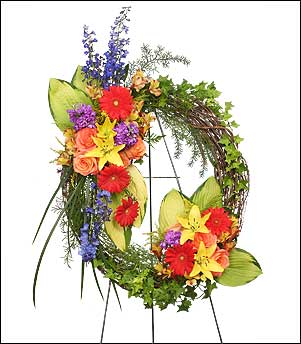
Standing Spray Funeral FlowersFrom birthdays to Valentine’s Day, weddings and funerals — flowers are a way to commemorate life’s most significant celebrations and events. Because flowers are essential to almost all family occasions, funeral flowers continue to hold great importance to most funeral traditions and services today.

Words are sometimes hard to find when a friend or loved one passes. Often, flowers better express the sympathy we feel for the family and our lost friend. The love and respect you feel toward the deceased and their loved ones is immediately conveyed by sending flowers. They are a means of communicating one’s love and support for the family, and a sign they are not alone in their burden of grief.

Today, flowers are not just sent to the funeral service, it is also becoming popular to send flowers to the home of the bereaved after the service.  This simple gesture of support can mean a lot to a family that is in the process of grieving the loss of a loved one.  As mentioned before, flowers can sometimes express what words cannot.  Sending flowers to the funeral home where the service will be held is still the most popular way to express sentiment.

Related Articles:

More on In Lieu of Flowers
How Funerals & Flowers Got Together

What to Expect From Your Funeral Director

May 18th, 2011

Planning a funeral during a time of grief can be a complicated and frustrating process. The family is left to make many decisions and arrangements for the services that will honor their loved one. Choosing a Funeral Home for the service to take place is the first step.
When choosing a Funeral Home there are several different factors to take into consideration, including:

  1. Funeral Costs
  2. Location
  3. Family and Religious Traditions
  4. Type of Funeral

Funeral Services are influenced by religious, cultural and family traditions along with costs and personal preferences. Every family has their own vision and expectation as to how to honor their loved one. These preferences will help to determine whether the funeral will be religious or secular, public or private, simple or elaborate, open or closed casket and whether the remains will be cremated or buried.

Funeral Director and Grieving CoupleFuneral Directors can help make the process less complicated and more relaxing during this time of healing and closure.

What Does a Funeral Director Do?

  • Provides transportation of the deceased to the funeral home from – the hospital, nursing home, hospice house, residence, etc
  • Helps notify proper authorities, family and relatives
  • Secures necessary permits and death certificates that your town or state requires
  • Gathers information and preparing death certificate
  • Prepares and submits obituary to local newspapers
  • Works with Insurance agents, Social Security or Veteran’s Administrators
  • Prepares the body for burial or cremation
  • Assists the family with funeral arrangements and purchase of the casket/urn, sympathy flowers arrangements, burial vault and cemetery plot and other aspects of the funeral service
  • Schedules the funeral service and the opening and closing of the grave with the cemetery personnel
  • Coordinates all the details with clergy including readings and music
  • Arranges police escort and transportation to the cemetery for the family prior to, during, and after the funeral
  • Works with the family to create personal and creative elements in the ceremony to both honor and celebrate the your loved one’s life.
  • Provides Grief assistance and counseling for the family

Continue reading “What to Expect From Your Funeral Director” »

10 Steps for Estate Planning

March 11th, 2011

Why is estate planning important?

When planning for our future, especially our family’s future, we often have specific instructions for how and where we want our possessions to be distributed on the occasion of our death. Each state has different regulations and rules about one’s assets after their death. If you do not prepare your own Estate Plan or Will, the government will decided how and to whom your possessions will be given. This is often a long, unfair and saddening process for family members who are already coping with the grief of losing a loved one. To avoid this you should begin by planning a distribution of your assets and belongings in a legal will.

Who needs estate planning or a legal will?

Whatever the circumstances and despite age, estate planning and a legal will is something we should all have prepared. However, knowing how to articulate our wishes or knowing what information is needed can be a difficult task.

Following this 10 Steps for Estate Planing Checklist can help collect and organize the information you need to plan your estate and prepare a will.

10 Steps For Estate Planning

  1. Family Information
  2. Financial Information
  3. Goal Setting
  4. Legal and Tax Analysis
  5. Plan Recommendations Continue reading “10 Steps for Estate Planning” »

Is “In Lieu of Flowers” a Good Idea?

February 28th, 2011

In Lieu Of Flowers A Good Idea?The death of a friend or family member is always a difficult and confusing time. Families often make requests that gifts be given to charity in lieu of flowers.  This is usually the result of advice from well-intentioned friends or organizations. While a family may want to do something special in the name of the deceased, it is not always appreciated by all. There are many implications that go along with an in lieu of flowers request.  An obituary itself is an announcement of the death and an invitation to friends and acquaintances to attend the funeral.  The obituary is not, however, an expectation of flowers, gifts or donations.

In some cases, an in lieu of flowers request can cause discomfort or embarrassment for friends and relatives. Those who do follow the request may be confused and embarrassed by those who ignored the request and sent flowers. Many people prefer more traditional ways of expressing their sympathy and like to make the decision on their own whether to send flowers, make a donation or send a card.

No matter one’s preferences, in most funerals today there is room for both flowers and charity.  The concept of giving to charity during a times of sadness can help lift the spirits of those left behind.  The comfort and tradition of giving flowers can also help to lift the mood of the day, as well as create a lasting memory of the funeral.  Personalized funeral tributes can spark wonderful thoughts of times spent together.

In any case, it is always very important to consider what the deceased person would have wanted when making certain requests.  Regardless of the request, a funeral is a celebration of life that should be honored according to the wishes of the deceased and their family.
Related Articles:

More on In Lieu of Flowers
How Funerals & Flowers Got Together
Funeral Flower Ordering Tips