Author Archive

Funeral Music and Why It Is Important

July 4th, 2011

Funeral Music has a natural way of reaching deep into our unconscious and provide the rich opportunity for healing, while accessing unspoken words, thoughts and feelings. It has a way of soothing and comforting someone in grief, stimulating pleasant memories of time shared with the departed person.

Funeral MusicThere are no rules for funeral music.

Different cultures and religions call for different types and styles of music. However, the music needs to reflect the departed character. Beautiful hymns, classical music, Celtic Aires, country classics or lullabies are the most popular styles. If you are having trouble choosing the right music, here is a list of some of the most used songs for funeral and memorial services. Funeral music works as a gathering and closing in the funeral or memorial service. It sets the time and structure for the ceremony.

Popular Funeral Music

Amazing Grace – Elvis Presley
The Prayer – Celine Dion and Andrea Bocelli
Candle in The Wind – Elton John
Con Te Partiro/Time to Say Goodbye – Andrea Bocelli and Sarah Brightman
Hallelujah – Jeff Buckley
I Am Your Child – Barry Manilow
Remember When – Alan Jackson
Over The Rainbow – Eva Cassidy
What  A Wonderful World – Louis Armstrong
Wind Beneath My Wings – Bette Middler

Continue reading “Funeral Music and Why It Is Important” »

When A Death Takes Place In A Hospital

July 2nd, 2011

A great sense of grief and loss occurs over the death of a loved one, whether that death is sudden or expected. Experiencing an expected death doesn’t make things easier, but it does generally make the planning for the funeral less difficult.

The list of responsibilities and decisions when someone dies is large and can be overwhelming, but often times when a death is expected, the decedent may have had time to make their own wishes known, either vocally or in writing though a pre-planned will or estate; thus making it easier for the family.

Once the family has chosen a funeral home, the funeral director will help you plan the arrangements for the service.

They will need basic information about the deceased and the family; working with you to ensure a beautiful and respectful service to honor your loved one.

Planning a Green Burial

June 30th, 2011

What is a Green Burial?

Planning A Green BurialA green, natural or eco-burial is a burial that allows the body and the burial grounds to stay as natural as possible. No embalming, concrete vaults, or toxins are used. Bio-degradable caskets, shrouds or blankets are used instead of traditional caskets, urns or vaults.

What is the Importance of a Green Burial?

Green Burials cause minimal environmental impact. In nature everything is recycled, there is no waste. Green burials are both an earth friendly, and less expensive option.

Is Cremation Considered Green?

A green burial is often an alternative to cremation. Cremation, however is more environmentally friendly than traditional burials. Using a bio-degradable urn is a good option if you’re considering a green cremation.

Modern crematoriums have made significant reductions in emissions through out the years, making cremation a safe choice.

What are the Costs of a Green Funeral?

The average price for a green burial ranges from $1,000 – $4,000, which usually includes the burial plot, opening and closing of the grave, grave marker and maintenance fee.

Continue reading “Planning a Green Burial” »

What to Wear to a Funeral

June 28th, 2011

Many people feel anxious about attending a funeral: knowing what to wear, what to say and how to respectfully express sympathy to the grieving. You want to feel comfortable and relaxed when attending a funeral, not anxious about your clothing. Here are some basic guidelines for what to wear:

Funeral attire is traditionally all black, but dark or muted colors are also acceptable. Business attire, such as a dress or suit is sufficient for most funerals.

Women’s Attire at a Funeral

  • Most women wear a dress or skirt to a funeral, although dress slacks are usually suitable. Shoulders should be covered, especially if the service is in a place of worship. Think practical when planning your wardrobe for a funeral. Consider the weather, the place and the type of funeral. Wear comfortable shoes and jacket if needed.
  • The colors need to be professional and conservative. Black, grey, navy or neutral are safe. You don’t want to draw attention to yourself.

Men’s Attire at a Funeral

  • Men generally wear suits when attending a funeral. Black is best, however, grey and navy are also acceptable with a white shirt and tie.

Children’s Attire at a Funeral

The rules aren’t so rigid when it comes to children.

  • Little boys should wear dark colors, preferably a suit. Try to avoid jeans, tennis shoes or casual attire.
  • Little Girls can wear dresses or skirts in dark or neutral colors.

Planting a Memorial Garden

June 26th, 2011

The purpose of a Memorial Garden is to keep memories of a loved on close by. It’s a tribute in honor and remembrance of someone you have lost.Creating a Memorial Garden

Setting aside a place in your backyard dedicated to your loved one’s memory, gives you a place that is relaxing, serene, and calming. A place to speak to your loved one in the privacy and comfort of your own home. A memorial garden is also a wonderful healing tool for children who are grieving the loss of a parent or sibling. Letting the child help create the memorial, including objects or flowers that are important to them can help ease the pain.

Starting Your Memorial Garden

Create a rock garden by outlining a quiet, secluded area of your yard with stones. Stones you can find in nature or buy from a nursery. Plant flowers or a small tree in the center. Adding decorative, solar lights to your memorial garden will keep the memory of your loved one shining bright.

Continue reading “Planting a Memorial Garden” »

When Someone Dies At Home Alone

June 24th, 2011

The first step you need to make when you are confronted with such a terrible situation is to contact the authorities.

  • Paramedics will arrive at the home to evaluate the situation and decide whether to transfer your loved one to the hospital or funeral home.
  • Depending on whether the death was an act of violence or natural death, the police may be involved.
  • If an autopsy is required, the coroner or medical examiner will discuss the details with you. Procedures for this process vary by state and county. More information about autopsies can be found on the American Autopsies website.

Once officials have determined the cause of death, the body will be transported to the funeral home chosen by the family.

Funeral Directors are a blessing to the family in grief; offering help in the planning and coordinating of the funeral service. They will need personal information about the decedent including:

  • Date of birth
  • Address
  • Phone number
  • Name’s of immediate family members
  • Social security number.

Your funeral director will be able to walk you through the funeral service process.

How to Create a Meaningful Eulogy

June 22nd, 2011

What is a Eulogy?

A eulogy is a heartfelt, good-bye tribute to honor and celebrate the life of the deceased. This tribute addresses not only to the person who has died, but to the friends and family that have gathered at the service.

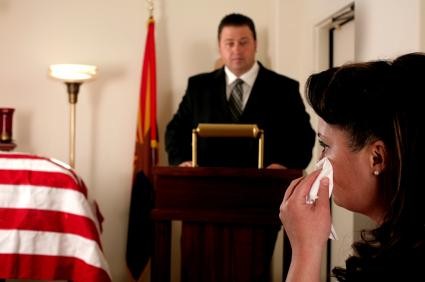
Man Giving A Eulogy At A Military FuneralA Eulogy Includes:

  • An introduction to the person’s life
  • Details, such as family, friends, interests, passions, likes and dislikes
  • Significant memories and achievements of the deceased
  • Scriptures, poetry and favorite stories written or enjoyed by the deceased are commonly read

It does not have to be perfect, the most touching and meaningful eulogies come from the heart. Eulogies are not a biography, rather a loving and heartfelt speech that expresses the feelings and experiences shared between the person giving it and the deceased. Remember, whatever you write and deliver in the eulogy will be appreciated by the people in attendance.

How To Write A Eulogy

1.) Recall memories: Think about the relationship you shared, where you met, what you did together, humorous or touching memories and what you will miss the most.

Continue reading “How to Create a Meaningful Eulogy” »

Coping with Grief

June 20th, 2011

Losing a loved one can be one of the most difficult experiences in our lives. The loss of a loved one can throw you into a place of uncertainty. Allowing the time to grieve, reminisce, reflect and accept will help heal your emotional state. We heal by taking time to focus on the loss, and how it will affect us.

Grief differs from one person to another, and is a normal response to loss. The journey from initial shock and disbelief, to acceptance and emotional stability takes time. The amount of time it actually takes depends on the person. The grieving period can last from several weeks, to months and possibly years.

What is Grief?

Grief, in its simplest terms, is a reaction to loss. It affects us spiritually, behaviorally, physically and cognitively. Our response is affected by our culture, religion, gender and circumstances surrounding the loss. Bereavement is the way we process grief.

When coping with grief you might feel:

  • Strong emotions, such as sadness, anger, helplessness and loneliness.
  • Funeral Director and Grieving CoupleNumbness, or a sense that the situation isn’t real.

  • Physical reactions, such as insomnia or waves of nausea.
  • Spiritual reactions to a death. Some people find themselves questioning their beliefs and feeling disappointed in religion, while others find that they feel more strongly than ever about their faith.
  • Separation from family members and friends.
  • A loss of interest in hobbies and melancholy.
  • Memory loss, shortened attention span or difficulty communicating with others.
  • Guilt.

Other physical symptoms related to grief are:

  • Weight loss or weight gain
  • Fatigue
  • Headaches, chest pain or high heart rate
  • Digestive problems
  • Hair loss
  • Night sweats

Continue reading “Coping with Grief” »

What To Do With a Facebook Account When Someone Dies

June 19th, 2011

FacebookThis is generally not one of the first things that someone in mourning will think of. In many cases the family and and friends do not want their loved one’s profile on Facebook floating around in cyberspace. In this article we will walk you through the process of deleting, memorializing, or deactivating their profile.

Memorializing Your Loved One On Facebook

If you wish to memorialize the account you will be required to fill out a form that has information with their name, date of birth, email address associated with the account, and proof of death. Proof of death can be an obituary or newspaper article. (Find the form here.)

Memorializing the account removes some of the more sensitive information like status updates and restricts access to the confirmed “friends” only.

Deleting Your Loved Ones Facebook

If  the family decides it would be best to delete the Facebook account completely this can be done by simply removing the account so that no one can view it. (If the account is removed – Facebook will not restore the account or provide any information about it unless required to do so by law)

If you have any other questions or concerns regarding Facebook accounts, refer to the “Help” section of Facebook.

How to Write a Sympathy Letter

June 17th, 2011

Writing a letter of condolence shows the recipient that you have put time and thought into expressing emotions that are not always as easily expressed through a commercial sympathy card. Sympathy letters are better written in hand than typed. Write as if you were speaking directly to the recipient, keeping it from being too formal.

What should a sympathy letter contain?

How you heard of the loss Be personal and acknowledge the name of the deceased, share how you learned of the death, and how it made you feel.

Special traits of the person Write about the positive characteristics that made that person special. How they affected the people they knew, what they did in the community, and what made them shine.

Express your sympathy Share and express your sadness, and sympathy.

Recall a memory Tell a brief story that features the deceased. How they touched your life. Something uplifting or even humorous, to celebrate their life.

Offer words of courage Mentioning the bereaved strength and offering emotional support.

Offer to help Volunteer to help with whatever needs they have, whether it be grocery shopping, cleaning house or watching the kids.

A heartfelt closing Sign with a loving phrase.

“You are in my thoughts and prayers”
“May God comfort you now and the days ahead.”
“With Deepest Sympathy”
“Our love is always with you”

Sympathy Letter Example

Below is an example of a sympathy letter using the steps above.
Continue reading “How to Write a Sympathy Letter” »